Roof Repair or Replacement: How to Decide What Your Roof Needs
A practical guide to understanding the condition of an existing roof and choosing a proportionate next step.
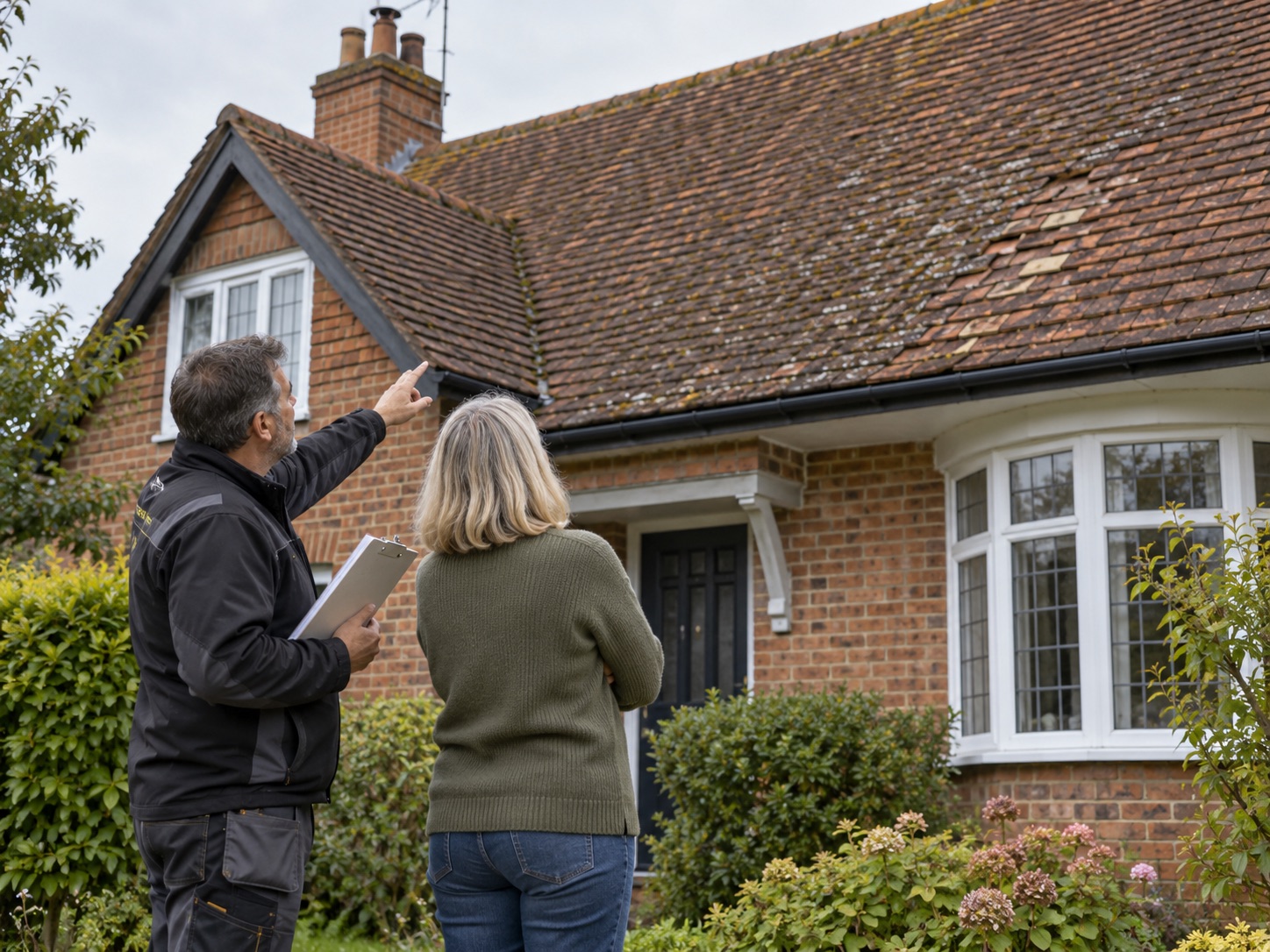
A leak or a slipped tile can make a replacement roof feel inevitable. Sometimes renewal is the sensible answer; sometimes a focused repair will put an otherwise serviceable roof back in order. The useful question is what has failed, how far the problem extends and what each proposed solution would actually achieve.
For an existing home, that decision starts with the condition of the roof already there. It is a different exercise from choosing the complete specification for a new build. Here is how to prepare for the discussion with a roofer or surveyor.
Start with the cause, rather than the stain
A damp patch on a ceiling tells you where water has become visible, but it may not identify where it entered. The SPAB’s roof maintenance guidance notes that signs of a leak can appear some distance from its entry point. An inspection should trace the route and assess nearby details, rather than assume the covering directly above the stain is responsible.
Record when the problem appears, which rooms are affected and what previous work has been done. Photographs from a safe position and old invoices can help. Ask the inspector to distinguish a roof leak from other possible moisture sources, including condensation or plumbing, before a repair is specified.
When a targeted roof repair makes sense
Repair is worth considering when the defect is localised and the surrounding roof remains sound. Examples include a small number of damaged tiles, a failed junction around a chimney or a limited area of damaged flashing. The important point is whether the proposed work addresses the cause and can be integrated properly with the existing materials.
Ask what will be checked around the visible damage. Replacing a tile without investigating why it slipped may leave an underlying fixing problem unresolved. Equally, replacing an entire roof because a small junction needs attention can be unnecessary. A useful recommendation describes the extent of the defect and explains which sound components can stay.
For traditional buildings, retaining serviceable material and using compatible repair details also matters. The SPAB’s advice supports attending to minor faults before they cause more extensive damage. Appropriate repair methods depend on the building and its materials; one standard patch is unlikely to suit every roof.
When replacement deserves serious consideration
A replacement assessment becomes more useful when deterioration is widespread, faults recur across different areas, or the layers supporting the covering cannot be put right through a proportionate local repair. A roofer may need to investigate the condition of battens, fixings, underlay or a flat roof’s deck before recommending a scope.
Ask for photographs and a clear explanation of what has failed. “Old roof” is a description, rather than a diagnosis. A proposal should say whether the work involves one slope, a separate extension roof or the whole roof, and why that extent is justified. Some existing coverings may be suitable for reuse, subject to inspection and the specification.
Repeated leaks also need interpretation. Several unsuccessful patches around one poorly detailed junction do not automatically prove that every part of the roof needs replacing. On the other hand, paying repeatedly for access to repair a roof with widespread deterioration may make planned renewal worth comparing. Request both options where they are technically credible.
Flat roofs need a system-specific assessment
For a flat roof, ask the contractor to consider the waterproofing, seams, perimeter details, outlets and supporting deck together. An isolated defect in an otherwise suitable system may allow a compatible repair. More extensive deterioration or problems beneath the surface can require a broader solution.
A new surface alone may leave an underlying drainage or deck problem unresolved. Ask how the proposed work addresses the identified cause, whether any opening-up is needed and what will happen if concealed damage is found. Avoid judging a flat roof solely by a photograph or the name of its covering.
Compare complete proposals, not headline prices
For local context, Openly Roofing’s Sudbury roofing website covers repairs, replacement roofs, flat roofing and roof care. That range is a useful starting point for framing the enquiry: explain the visible problem and ask which route suits the property, rather than deciding on a replacement before the roof has been assessed.
Give each contractor the same information and ask for a written scope. A clear comparison should cover:
- The diagnosed defect, affected area and work proposed.
- Materials, repair details and treatment of adjoining roof elements.
- Scaffolding or other access, temporary weather protection and waste removal.
- Allowances for concealed damage and the process for approving extra work.
- VAT, payment stages, programme and the terms of any guarantees.
Ask who will check any project-specific permission or building-control requirements. Keep those responsibilities explicit. The site’s new-build roof calculator uses rates supplied by the visitor for a new-build package; it is not a ready-made replacement-roof quotation.
Use age as background, and evidence to decide
Roof age, previous maintenance, exposure and the history of repairs all provide context. There is no single age threshold that can settle every repair-or-replace decision. A relatively recent roof may have a faulty detail, while an older one may retain serviceable materials. Ask what the proposed repair would leave unresolved and what maintenance would still be needed.
If opinions differ sharply, the roofline appears to have moved or the proposed work is substantial, consider an independent surveyor’s assessment before committing. Keep clear of unstable ceilings and falling materials, and arrange prompt professional help for active damage. Do not climb onto the roof to gather evidence: HSE guidance on fragile surfaces explains why roof access needs competent assessment and suitable precautions.
The best next step is a documented diagnosis, followed by a proportionate scope. A sound repair should solve an identified fault. A replacement should have an equally clear explanation of why retaining and repairing the existing roof is no longer the appropriate option.